
A ticket time is the time from when an order reaches the kitchen to when it leaves the pass. It is the number owners watch, and the one that climbs first in a rush. Cutting it starts with knowing where the minutes go.
Where ticket time goes
Every ticket is made of three kinds of time:
- Cooking: the slowest dish on the order. A 12-minute steak sets the floor; no kitchen beats it.
- Queueing: time an item waits for a free cook or burner at a busy station.
- Waiting at the pass: time finished items sit until the rest of the order is ready, and time the expo spends chasing the last plate.
Only the first is fixed. Most of what you can cut is queueing and waiting.
Seven ways to cut it
- Measure real cook times, per dish. Menu guesses drift. Time each dish on your line, or let your kitchen screens learn it from cooks’ Start and Done taps. Separate the variants that really differ: a well-done steak, a large bowl.
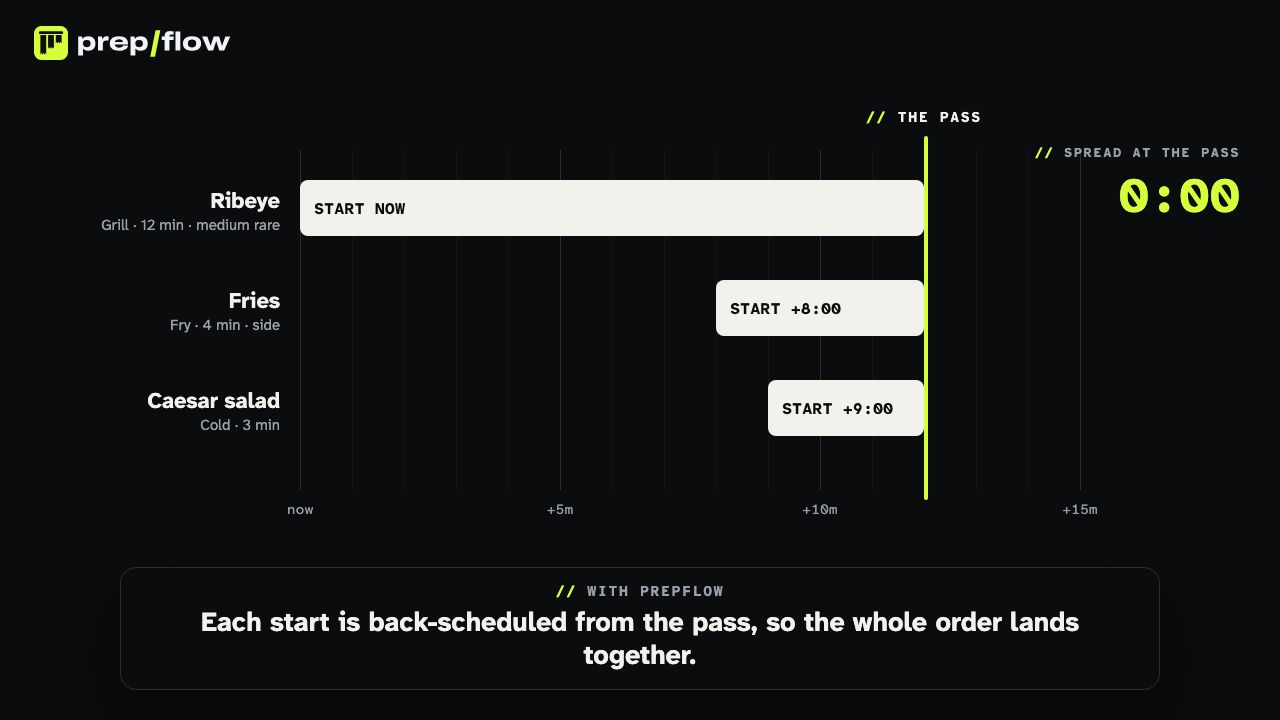
- Start the slowest item first. Count back from when the order is due so every item finishes together. The steak starts now; the 4-minute fries start at minute 8.
- Stop firing everything at once. When every station starts the moment a ticket lands, fast stations fill up with items that are not needed yet, and the next ticket queues behind them.
- Respect station limits. A grill with room for six steaks cannot take a seventh. Plan around capacity, or the plan breaks exactly when you need it.
- Re-plan when the kitchen drifts. A cook starts late or a server adds a side: the waiting items should move at once, so the order still lands together instead of in pieces.
- Keep earlier orders first. A new ticket should never push back one that is already cooking. Pace each order in turn.
- Watch the spread at the pass. The gap between the first and last item of an order being ready is the clearest sign of wasted time. Aim for under 90 seconds.
Measure the right things
Total ticket time hides the cause. Track alongside it:
- On-time share: how many orders were ready when they were due.
- Spread at the pass: how long finished food waited.
- Late starts by station: where the plan slipped.
How PrepFlow helps
PrepFlow plans each item’s start at each station from when the order is due, knows how many items each station can cook at once, and re-paces live as service happens. Its watch-only screen shows on-time share and spread at the pass during service, and learning keeps each dish’s time true to your line. Read more in what kitchen pacing is.
Questions
What is a good kitchen ticket time?
It depends on the menu: a fast-casual bowl might target 5 to 7 minutes and a full-service entrée 12 to 18. A better target than one number is the slowest dish on the order plus a short margin; anything above that is waiting, not cooking.
Does starting fast items later make ticket times longer?
No. The slowest item still starts at once, so the order is ready just as soon. Starting the fast items later only stops them waiting at the pass.